
Over 30 children across several schools in North London infected with Measles as a result of declining vaccinations.
There were 34 confirmed measles cases in Enfield and Haringey in January, with infections were reported to affect several schools. UKHSA data shows the Enfield cases accounted for a third of the total 96 cases of measles recorded in the first month of the year.
The data released from the NHS and UKHSA suggests that the outbreak is largely affecting unvaccinated children under 10. The NHS recommend families to ensure children receive their vaccinations, as immunisation is the most effective protection against the disease. Furthermore, free catch up vaccination clinics are available nationwide.
Measles spreads extremely easily and can lead to serious complications and long term health problems and potentially death. The disease is preventable with two doses of the MMRV vaccine. Additionally, families travelling abroad especially during Easter to check vaccination status as measles remain common in some countries and outbreaks also occurring in other parts of Europe right now.
Why this is happening.
The outbreak reflects a broader decline in vaccination uptake. Data from the NHS show that overall coverage stands at 84% which is 4% down from 2014-15. Far below the recommended 95% coverage needed for herd immunity. Subsequently, the World Health Organisation has announced that the UK has lost its measles elimination status.
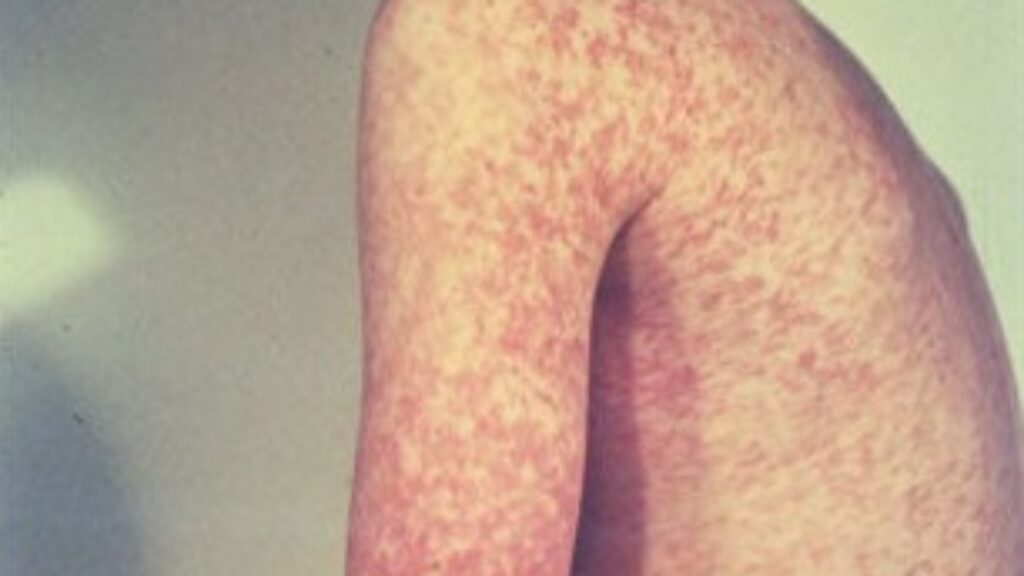
Measles is a highly contagious illness spread through coughs and sneezes. Symptoms include fever, red watery eyes, coughing, sneezing, white mouth spots and rashes that begin on the face and spreads across the body.